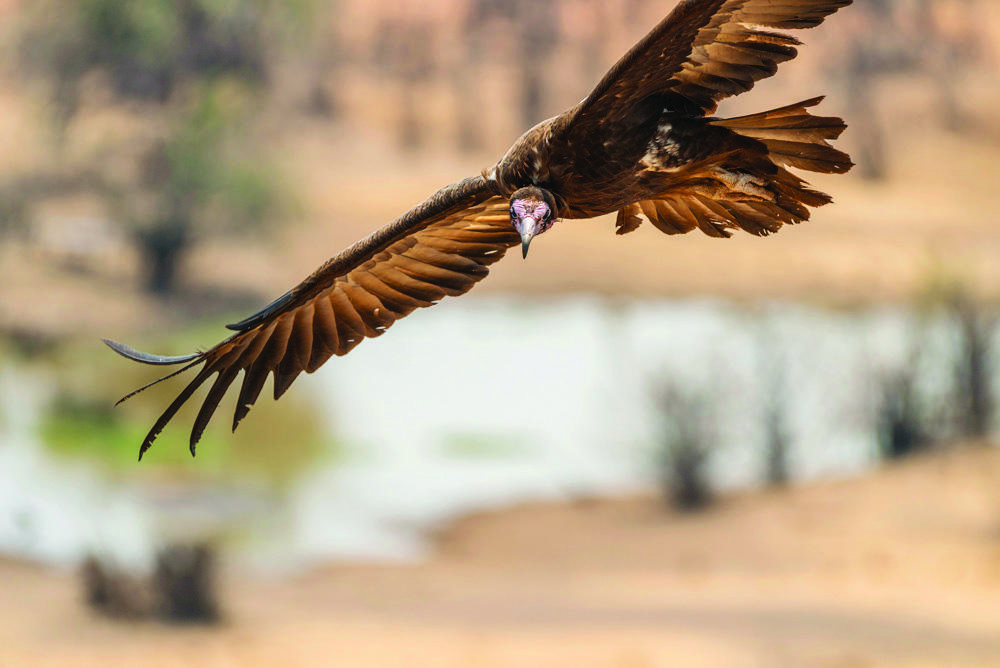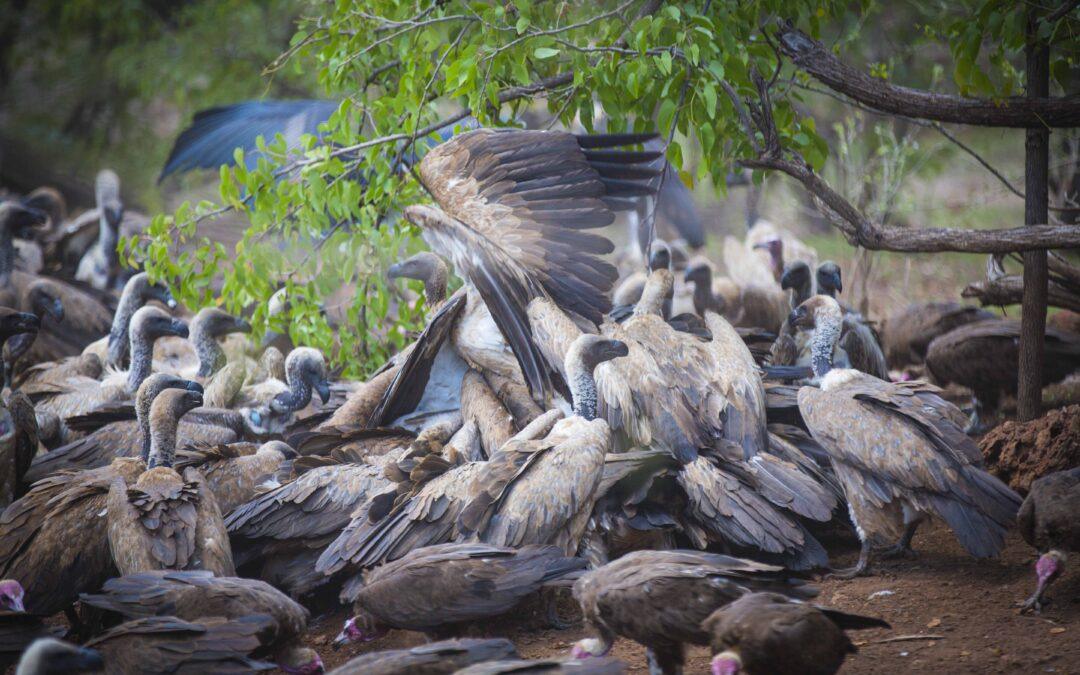
Just before 1 pm at Victoria Falls Safari Lodge, there is movement in the sky. Vultures begin appearing above the bush, some circling on the thermals, others settling into nearby trees. They know the routine.
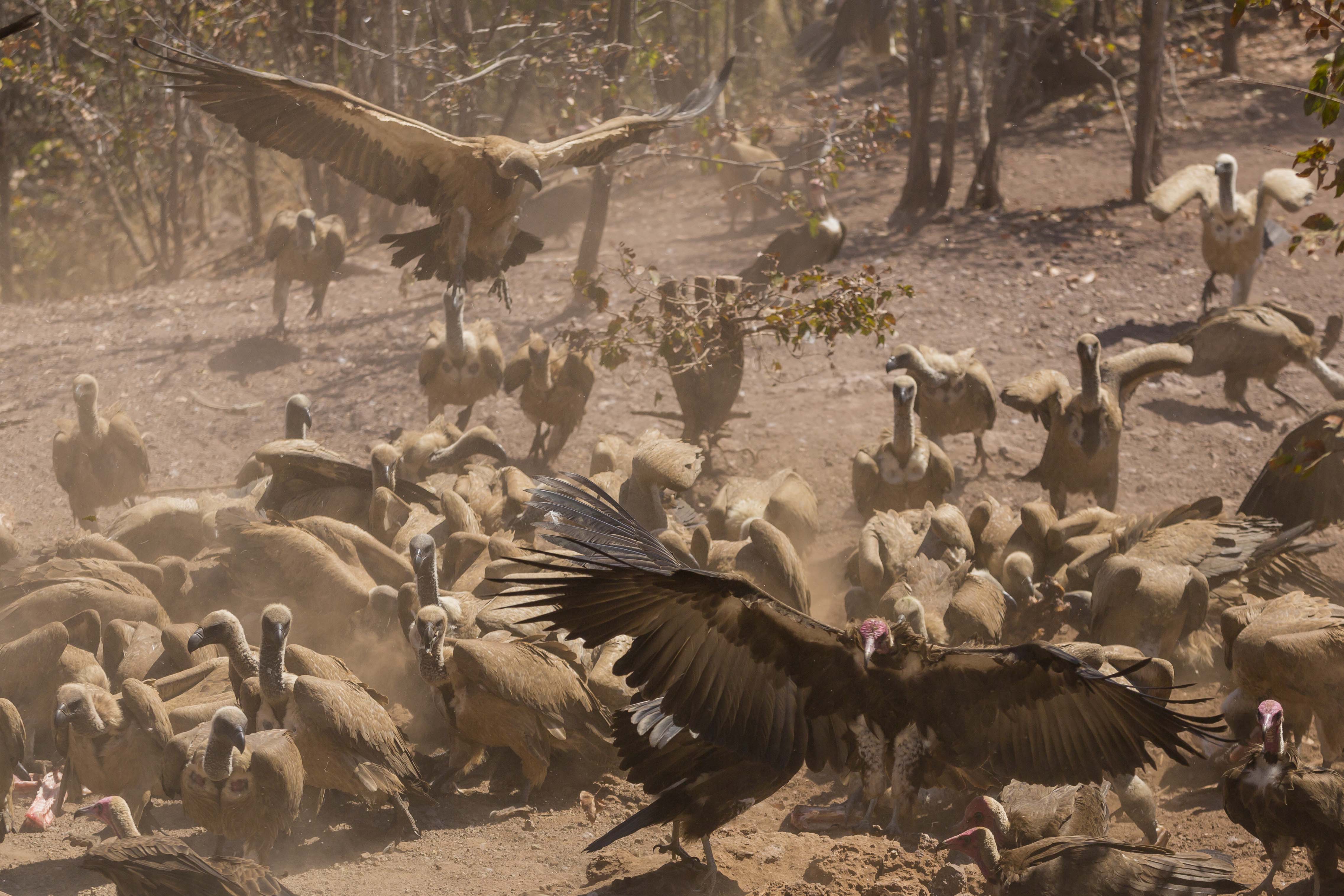
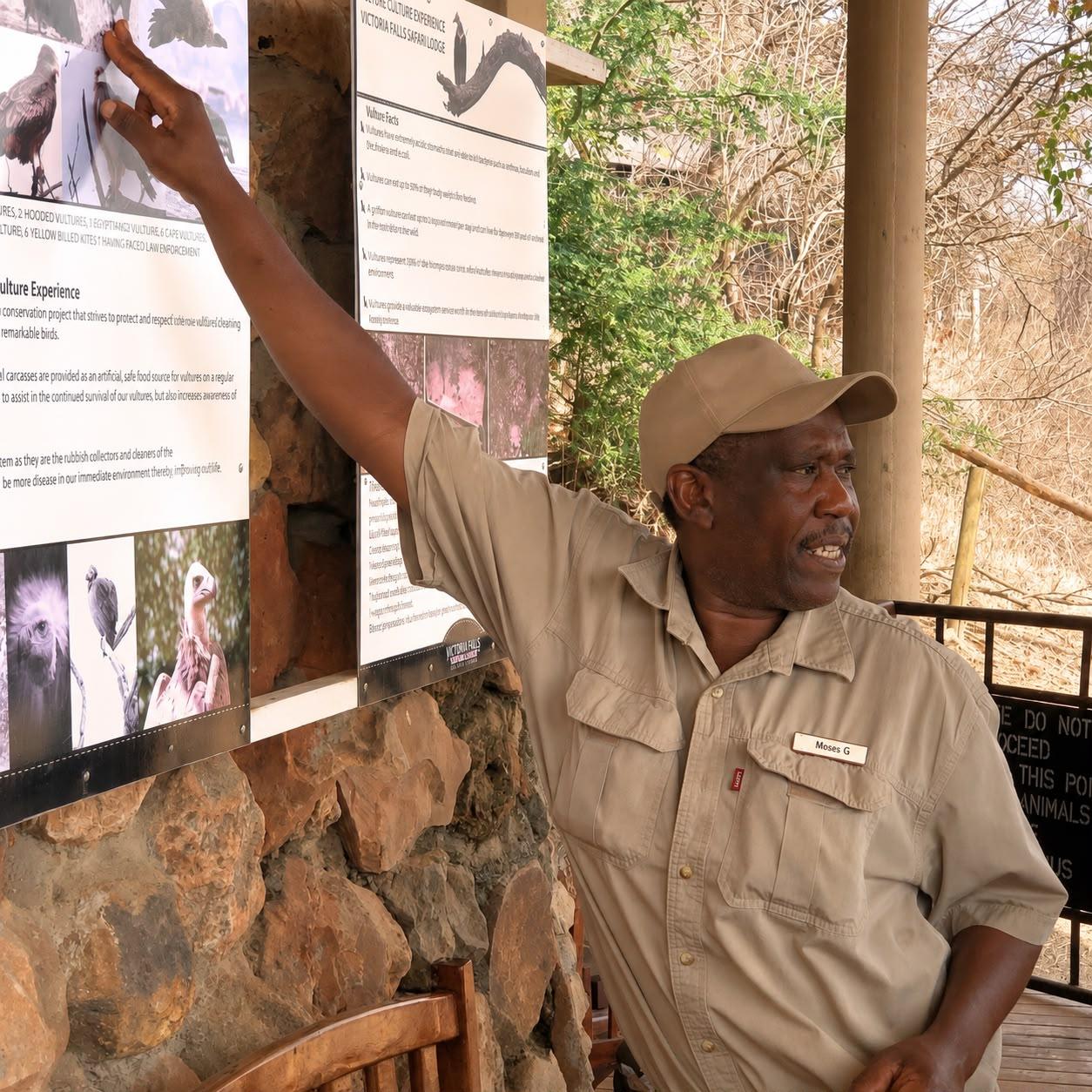
Down below, Moses Garira is preparing for their arrival. The lodge’s vulture specialist has done this many times before. Soon, leftover meat scraps and bones from the lodge’s restaurants will be placed on an open patch of ground, and the waiting birds will descend, sometimes in their hundreds.
For visitors, it is quite a sight. For the vultures, it is lunch. But behind what has become a familiar daily routine at Victoria Falls Safari Lodge is a much bigger conservation story.
NATURE’S CLEAN UP CREW
Vultures have never enjoyed the glamour afforded to Africa’s lions, elephants or eagles. Their association with carcasses has hardly helped their reputation. Yet remove them from the ecosystem, and their importance quickly becomes clear.
Vultures are scavengers rather than hunters. Unlike many birds of prey, they are not equipped to catch and kill healthy animals. Their job begins after an animal has died, consuming carcasses that might otherwise remain in the environment and become a source of disease.
Garira has a wonderfully simple way of explaining it.
“They don’t have very strong talons; their feet are more like a chicken’s, and so they could never kill their prey,” he says. “They feed only on what is already dead, and in doing so they control the spread of diseases.”
It is not the most glamorous job in the bush, but it is an important one.
SO WHY FEED THEM?
The feeding at Victoria Falls Safari Lodge is supplementary. These are wild birds, free to come and go, and they continue to find food naturally across the region.
What the programme provides is a regular source of safe food, something that matters when one of the greatest threats facing Africa’s vultures is poisoning.
The problem can be deliberate or accidental. Vultures circling above a carcass can reveal the location of a poached animal to wildlife authorities. As a result, poachers sometimes poison carcasses to kill the vultures and avoid drawing attention to the scene. A single poisoned carcass can kill large numbers of birds.
Power lines pose another danger, while habitat pressures and the use of vulture parts in traditional medicine have also contributed to declining populations. All of Zimbabwe’s vulture species are now classified as either Endangered or Critically Endangered.
A RESTAURANT WITH A DIFFERENCE
At Victoria Falls Safari Lodge, leftover meat scraps and bones from the onsite restaurants are put to good use. The birds get a safe supplementary meal without being made dependent on the feeding programme.
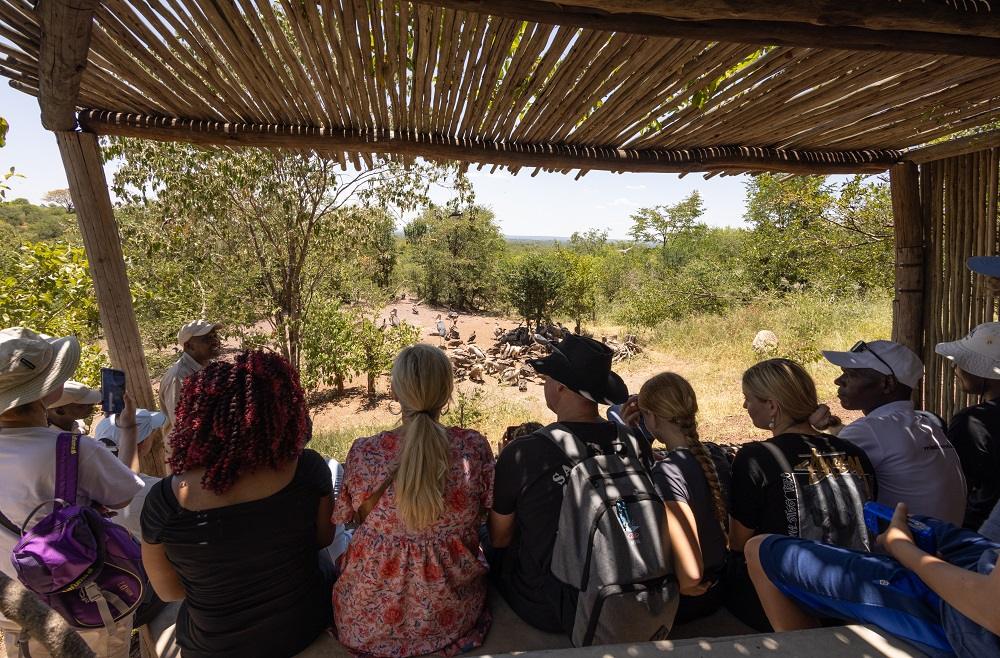
The daily gathering also provides an opportunity to observe the birds and, importantly, to introduce travellers to a side of conservation they might otherwise overlook.
White-backed and lappet-faced vultures are among the regular visitors, often arriving alongside other scavengers. Watching them descend is impressive enough. Understanding why they are there changes the experience completely.
The Vulture Culture Experience is supported by the Victoria Falls Wildlife Trust and VulPro, with funds from selected meals at the lodge also contributing towards vulture conservation.
CHANGING PERCEPTION
And this is where Moses Garira’s role becomes particularly important.
Before the birds descend, he explains what visitors are about to see, how vultures live, the threats they face and why losing them would have consequences well beyond the birds themselves.
For an animal with something of an image problem, those few minutes matter.
Most visitors to Victoria Falls arrive with elephants, lions and perhaps a sunset over the Zambezi high on the wildlife wish list. Vultures are unlikely to make the opening cut.
Spend half an hour on the Vulture Deck with Moses Garira and a few hundred hungry arrivals, however, and it becomes difficult to look at them quite the same way again.
VULTURE CULTURE EXPERIENCE
- Victoria Falls Safari Lodge
- Daily at 1 pm
- Approximately 30 minutes
- Complimentary
Text by Mukoma Bryan | Images © Victoria Falls Safari Collection